
Auripa
Global Trading Card Game (TCG) Marketplace and Gacha Machine Built Natively as a Telegram Mini App
01 — Overview
Overview
a. Arcade-Style TCG Platform
Trading Card Games (TCGs) represent a massive global market, but collecting and trading digitally often suffers from clunky interfaces and complicated wallet setups. Auripa was created to merge the fun of physical card collection with the convenience of Web3 technology.
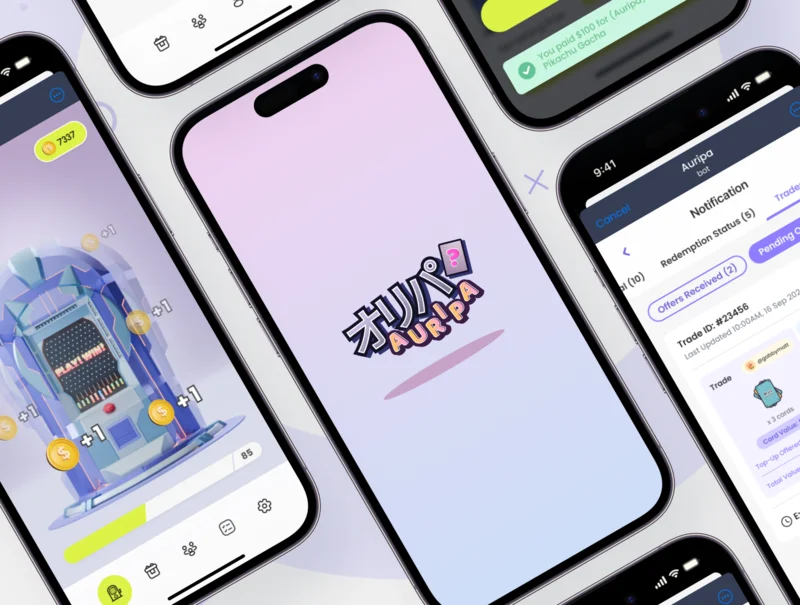
The app operates natively within Telegram, utilizing the Mini App SDK. By integrating Web3 card ownership verification and a responsive 3D Gacha machine, the system is designed so that users can draw card packs, manage their binder portfolios, and trade with peers instantly.
- Integrated the Telegram Mini App SDK and Telegram Bot API to load the interface natively inside Telegram chats
- Coded the 3D Gacha and Arcade machine interaction layers using Three.js to provide an engaging card-drawing feel
- Integrated TON Blockchain wallets to facilitate secure buying, selling, and owning of digital TCG assets
- Developed a real-time trading notification interface using WebSockets to alert users of peer-to-peer exchange offers
- Structured the digital TCG inventory management system for cataloging and displaying card collections
- Collaborated with visual designers to implement the dark-themed arcade layout
- Conducted usability testing for peer-to-peer card trading steps and Gacha mechanics
02 — Problems & Challenges
Problems & Challenges
a. Web3 Onboarding & Wallet Friction
Most Web3 trading platforms require users to install separate browser extensions or switch apps to sign transactions, causing high drop-off rates.
This friction was bypassed by running the application entirely within the Telegram Mini App environment. The integration of TON wallet support directly via the Telegram SDK enables single-tap transaction approvals, eliminating the need for external wallet downloads.
b. Live Trade Negotiation Alerts
In peer-to-peer trading, users need real-time feedback to accept or counter trade offers. If users do not receive instant notifications, trade proposals expire, and engagement drops.
A real-time trading notification interface was developed. The system leverages WebSockets to send immediate push updates directly to the user's screen when a trade request is received, accepted, or updated.
03 — Project Goals
Project Goals
a. Frictionless Trading Loop
The goal was to design an intuitive card trading screen that lets users inspect card values, propose trades, and finalize swaps with minimal taps.
b. Immersive Unboxing Experience
To capture the nostalgia of opening physical card packs, a 3D Gacha machine interface was developed. The tactile feedback and card-drawing animations keep users engaged and build anticipation.
04 — Development Process
Development Process
a. Arcade Concept UI
The development mapped out the card-opening flow, from coin insertion to card reveal, keeping the layout focused on the 3D Gacha model.
The interface implements custom digital card frames and rarity indicators to make each drawn asset feel valuable. For the trading lobby, side-by-side card binders let users compare items during peer-to-peer negotiations.
05 — Usability Testing
Usability Testing
a. Trade Flow Verification
Testing verified the peer-to-peer trade flow with simulated user profiles, ensuring that WebSocket push notifications and item selections updated properly without lag.
Feedback helped improve the clarity of transaction state changes (e.g., Pending, Offered, Accepted).
06 — Prototyping & Handoff
Prototyping & Handoff
07 — Key Takeaways
Key Takeaways
a. Immersive Gamification Matters
Developing Auripa showed how to blend Web3 transaction flows with arcade-style gamification. By prioritizing the card unboxing experience and keeping interactions inside a single social app, the product creates a more engaging and accessible entry point to Web3 collecting.